The De-Stocked Flagship: Why 2026 Stores Trade Sales-Per-Square-Foot for Experience-Per-Square-Foot
The most talked-about flagships of 2026 are pulling stock off the floor on purpose, trading sales-per-square-foot for experience-per-square-foot and turning the store into a gallery that sells later, and elsewhere.

The store that stopped selling
For a century the retail floor answered to one number: sales per square foot. Every fixture, aisle and shelf existed to push more product past more shoulders per hour, and a store that surrendered selling space for anything else was wasting rent. In 2026 the most talked-about flagships are quietly abandoning that arithmetic. They are pulling stock off the floor on purpose, swapping racks for sofas, art and empty air, and treating the physical shop less as a point of sale than as a three-dimensional advertisement that happens to let you touch things.
The clearest tell is how brands describe their own openings. When the Scandinavian label Ganni opened a space of nearly three thousand square feet in London's Soho, the centrepiece was a large table holding a single pair of boots, flanked by tall cases showing one accessory per shelf. The bra brand Lively opened in Austin and gave up rack space for chairs, sofas and plants, calling the goal a gathering place rather than a shop. The denim house Mother opened a Beverly Hills flagship of roughly three thousand eight hundred square feet built around a sunken conversation pit and a cafe. In each case the merchandise is the smallest thing in the room.
Experience per square foot
Trade writers have started calling the new yardstick experience per square foot, and it is a genuine inversion, not a slogan. The old metric rewarded density; the new one rewards restraint. Negative space becomes a design tool because emptiness reads as confidence and confidence reads as value. A single handbag on an otherwise bare plinth is understood, correctly, as more expensive than twenty of the same bag on a wall rack, and the shopper does the maths without being told.
Luxury has always known this. What is new is how far the logic now travels down the price ladder, and how literally it is being built. Gentle Monster, the Korean eyewear house, releases more than a hundred styles a year yet stages its shops as art installations where a handful of frames sit like museum objects among robotics and sculpture. Jacquemus filled its New Bond Street flagship in London with around fifty artworks, furniture pieces and design objects, so the clothing reads as one exhibit inside a curated apartment. The product is present, but it is no longer the point of the room.
Negative space as the material
Designing this way changes what the interior is made of. The palette turns architectural and tactile — troweled plaster, stone, brass, timber, linen — because when there is little product to look at, every surface has to carry the story. Lighting turns theatrical rather than uniform, spotlighting a vignette the way a gallery frames a canvas instead of flooding a sales floor with even brightness. Layouts turn biomorphic and residential, using rugs to zone, curves to slow the walk, and comfortable seating to invite lingering. The reference is no longer the supermarket aisle but the museum room and the well-composed living room.
Crucially, the plan has to be reconfigurable. Because the floor now hosts events, collaborations and seasonal sets rather than a fixed grid of stock, the fixtures are movable and the walls can shift. The store is designed to be re-dressed the way a stage is re-set between scenes.
Where the stock actually went
The obvious objection is practical: if the boots are on a table one pair at a time, where is the rest of the inventory. The answer is that it retreated — to a compact back stockroom, to staff tablets, and above all to the customer's phone. The de-stocked floor works only because the sale can be completed elsewhere. A visitor handles the object, feels the brand, and buys the size that fits later, often online, sometimes from an assistant who orders it to their door. The shop's job is no longer to close the transaction but to manufacture the memory and the confidence that close it afterwards.
This is why the model spread with e-commerce rather than against it. The physical store stopped competing with the website for the sale and started feeding it, becoming the top of a funnel whose bottom is digital. Reported returns on richer flagship experiences — meaningful lifts in customer loyalty and in the value of the transactions that do happen in person — are what justify handing prime square footage to a sofa.
Measuring a moment, not a sale
If the store no longer lives or dies by units rung up, it needs new instruments. Retailers are wiring these spaces with AI-driven people counters, heat mapping and RFID to read dwell time, movement paths and the moments between arrival and purchase. One widely cited partnership frames the goal precisely as capturing the moments between traffic and transaction. Dwell time, not conversion alone, becomes the headline figure, on the reasonable theory that attention paid in the room converts into spending somewhere down the line.
The risk of the empty room
The strategy has a failure mode, and it is the same emptiness that makes it work. A floor with almost nothing on it can read as generous and assured, or as cold, confusing and vaguely closed for business. Brands admit that finding the right balance of space and product takes experimentation many cannot afford, and a shopper who cannot tell whether anything is for sale is not having an experience, only a bad afternoon. The winning stores keep one honest anchor — a clear way to buy, a helpful human, an object you may actually take home — so that all the negative space still resolves into a store rather than a showroom no one is allowed to use. Restraint is the point, but a shop still has to sell something, even if it sells it later and somewhere else.
Related articles
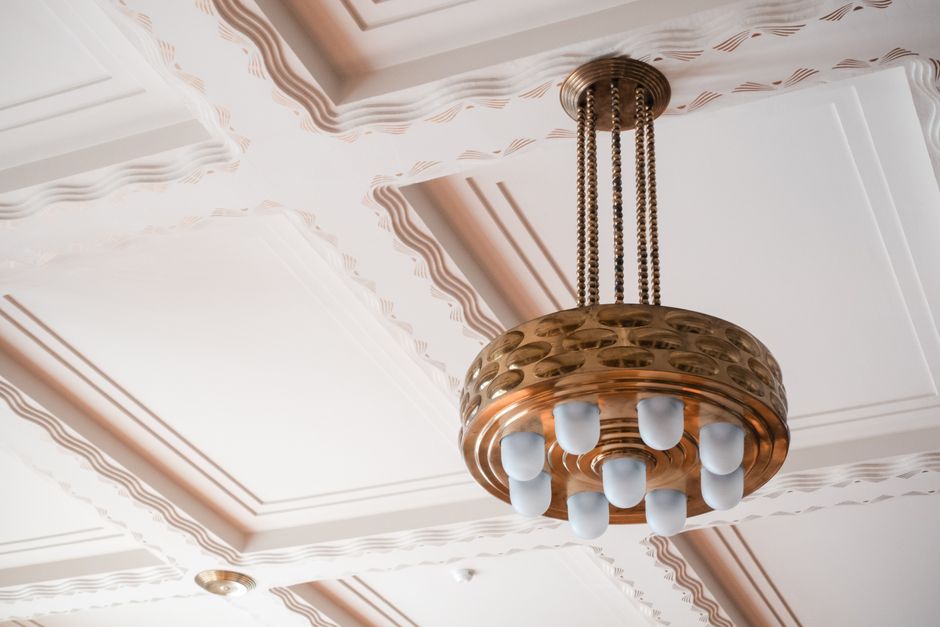
Neo Deco Keeps Art Deco's Lines and Throws Away Its Contrast
The 2026 Art Deco revival works by keeping Deco's geometric grammar — symmetry, fluting, sunbursts, stepped forms — while swapping its high-contrast black-and-chrome palette for warm, matte, low-contrast grounds.

The Store Built to Keep You: Why 2026 Retail Copies the Hotel Lobby
As the metric shifts from sales per square foot to dwell time, the 2026 flagship is being redesigned like a hotel lobby, trading selling floor for staying floor.