The Commute-Worthy Office: Why 2026 Bets on Focus and Connection Over Amenities
Offices are chasing boutique-hotel amenities to lure hybrid workers back. But the 2026 data says people cross town for enclosed quiet and real human connection — the two things a home office cannot supply.

The Amenity Trap
The office of 2026 has a new job title: destination. After four years of hybrid routines, employers have stopped assuming anyone will show up by default and started asking a harder question — why would a person cross town for a desk they can replicate at home? The fashionable answer is workspitality, a blend of workplace and hospitality that dresses the office in the language of a boutique hotel: baristas, rooftop terraces, lounge seating, mood lighting and cafe-style pantries where the break room used to be. It is a seductive pitch, and it is aimed at the wrong target.
The problem is not that comfort is bad. It is that comfort has been asked to do a job it cannot do. A flat white does not compete with home; home has a kettle. A sofa does not compete with home; home has a sofa, and a shorter commute to reach it. When an office tries to win on hospitality alone, it competes with the one venue that will always beat it on convenience — and loses.
What the Data Actually Says
The numbers point somewhere more specific. Leesman, which has surveyed hundreds of thousands of employees, finds that roughly 90 percent of people say individual, focused work is well supported at home. For most workers the spare room, not the open-plan floor, is now the better place to concentrate. Meanwhile Gensler's 2026 Global Workplace Survey — 16,459 workers across 16 countries — found that 65 percent of employees regularly retreat into meeting rooms to do solo focus work, because no quiet space exists for it anywhere else. Two-thirds of workers are quietly patching over the shortfalls of their own offices.
Put those two findings together and the picture sharpens. Home has quietly won the contest for concentration, while the office has kept building for a kind of spontaneous collaboration that occupies, by Gensler's own measure, only about 27 percent of the working day against 39 percent spent working alone. The office is optimised for the activity people do least and starved of support for the activity they do most.
The Two Things Home Cannot Give
If amenities are the wrong lever, what is the right one? The office keeps two genuine advantages a home office cannot replicate, and both are about substance rather than surface.
The first is enclosed, acoustically protected focus. Not a beanbag in a corner, but a real room with a door and a ceiling — the kind of space the 65 percent are currently stealing from booked meeting rooms. Designing the office as a destination for deep work means building focus enclosures as deliberately as a hotel designs a quiet suite: managed noise levels, a shut door, and a chair meant for two hours rather than two minutes. This is unglamorous and it does not photograph well, which is exactly why it has been neglected.
The second is human connection that is chosen, not manufactured. Here the 2026 data delivers its most useful surprise. Gensler found that the heaviest users of AI — now roughly 30 percent of the workforce — are not the most isolated but the most connected to their teams, spending less time working alone and more time learning from the people around them. The value of being in a room together did not fall as the tools got smarter; it rose. That is a mandate for social infrastructure with a purpose: rooms for mentoring, project rooms where a team can leave its work on the walls, spaces built for the unplanned exchange that teaches a junior colleague something no document will.
Design for the Verb, Not the Vibe
The distinction that matters in 2026 is between designing for a vibe and designing for a verb. A vibe is a lounge that looks warm in a photograph. A verb is what a person actually came in to do — concentrate, learn, decide, connect. The magnet office earns its name by making the verbs easier than they are at home, and it does that with a balance most current plans get wrong: fewer open desks nobody wants, more enclosed rooms for focus, and social zones sized for real interaction rather than decorative ones sized for the brochure.
There is urgency behind the shift. WORKTECH Academy, reading the same survey season, describes a widening workplace performance gap between what people need to do their best work and what organisations keep measuring and buying. The share of workers who call themselves highly engaged slipped from 42 percent in 2025 to 36 percent in 2026. Amenities have not closed that gap, because amenities were never the thing that was missing.
The Test for Every Square Metre
The useful question for any 2026 office is not whether a space is comfortable but whether it does something home cannot. A café that merely replicates a kitchen fails the test. A bank of sound-sealed focus rooms passes it. A lounge that hosts a real team ritual passes; a lounge that hosts only a stock photo does not. Hospitality warmth still belongs in the office — soft materials and good light make the enclosures and the gathering spaces places people want to use. But warmth is the finish, not the strategy. The office earns the commute when it gives people the quiet and the company that a home office, for all its convenience, can never quite supply.
Further reading
Related articles
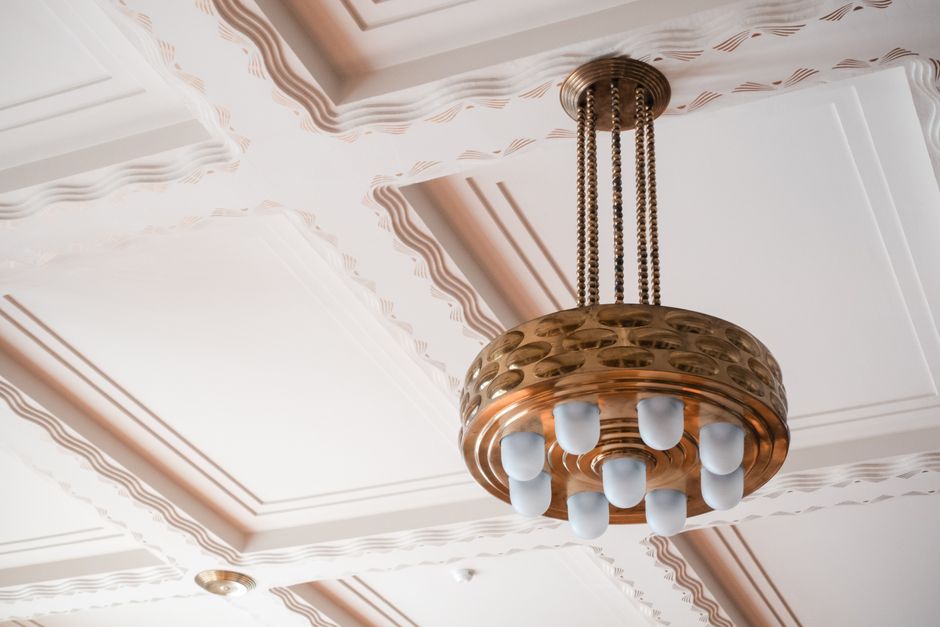
Neo Deco Keeps Art Deco's Lines and Throws Away Its Contrast
The 2026 Art Deco revival works by keeping Deco's geometric grammar — symmetry, fluting, sunbursts, stepped forms — while swapping its high-contrast black-and-chrome palette for warm, matte, low-contrast grounds.

The Store Built to Keep You: Why 2026 Retail Copies the Hotel Lobby
As the metric shifts from sales per square foot to dwell time, the 2026 flagship is being redesigned like a hotel lobby, trading selling floor for staying floor.