The Experiential Canvas: Designing Brand Identity Through Immersive Spaces
Acne Studios' Pink Library in Tokyo exemplifies a growing trend where brands leverage immersive, monochromatic, and temporary architectural interventions to transcend traditional retail. This approach crafts cultural experiences that foster deeper engagement and redefine brand identity through spatial storytelling.

The Experiential Canvas: How Brands Are Designing Cultural Immersion
In an era saturated with digital noise and transactional commerce, brands are increasingly seeking to forge deeper, more meaningful connections with their audiences. The recent unveiling of Acne Studios’ Pink Library in Tokyo offers a compelling case study in this evolving paradigm, illustrating how architectural interventions are transforming from mere retail environments into immersive cultural experiences. Far from a simple pop-up shop, this temporary installation at StandBy Harajuku is a deliberate spatial narrative, designed not for immediate sales, but for contemplation, engagement, and the subtle reinforcement of a brand's identity.
Beyond Transaction: The Rise of Cultural Commerce
Acne Studios, a brand renowned for its interdisciplinary approach that spans fashion, art, architecture, and publishing, understands that its identity transcends clothing. The Pink Library, celebrating three decades of the brand and its influential Acne Paper publication, embodies this philosophy. It functions explicitly as a reading room, a space "intended for reading and browsing instead of retail". This strategic pivot from direct commerce to cultural offering signifies a broader trend: brands are investing in physical spaces that act as extensions of their ethos, fostering community and intellectual curiosity. By providing a curated selection of books and magazines, alongside their own Acne Paper, Acne Studios positions itself as a patron of culture, inviting visitors into a shared world of ideas rather than just a storefront. This approach cultivates loyalty and resonance that transactional exchanges rarely achieve.
Monochromatic Immersion: A Branding Strategy
The visual impact of the Pink Library is undeniable. Its "monochromatic pink interior" is not merely an aesthetic choice; it's a powerful branding tool. In a world of visual clutter, a singular, bold color creates an immediate, unforgettable identity. This immersive pink envelops visitors, creating a distinct atmosphere that is both playful and sophisticated. The design cleverly leverages the existing "exposed concrete architecture" of the gallery, allowing the vibrant pink to pop against a raw, industrial backdrop. This contrast highlights the brand's ability to blend high fashion with an avant-garde sensibility. Monochromatic design, when executed with such conviction, transforms a space into a sensory experience, making it instantly recognizable and highly shareable, particularly in the age of social media. It’s a deliberate act of spatial branding that communicates confidence and a clear artistic vision.
The Ephemeral Canvas: Pop-Ups as Prototyping and Engagement Tools
The temporary nature of the Pink Library, appearing in Tokyo, Paris, and London, is central to its effectiveness. Pop-up installations serve as dynamic, ephemeral canvases for brands to experiment with new concepts, generate buzz, and engage diverse audiences in unique, time-limited ways. This scarcity creates urgency and exclusivity, encouraging immediate interaction. For designers, these temporary structures offer unparalleled freedom to push boundaries, test material palettes, and explore experiential narratives without the long-term commitments of permanent retail spaces. The Pink Library, with its continuous built-in sofa and low tables, transforms a gallery into an inviting, communal living room, demonstrating how temporary architecture can redefine public interaction with a brand. Its "large street-facing windows turn the library into an open display, inviting passersby inside", further blurring the lines between public and private, commercial and cultural.
Spatial Storytelling and Brand Identity
Ultimately, the Pink Library is a masterclass in spatial storytelling. It communicates Acne Studios' identity as a "cultural world — independent, interdisciplinary and led by curiosity". Every design choice, from the curated book selection by Tokyo bookstore POST to the offering of matcha by Cosmos Juice, reinforces this narrative. The space itself becomes a tangible manifestation of the brand's values, inviting visitors to participate in its story. This trend challenges designers to think beyond aesthetics and functionality, demanding a deeper understanding of brand narrative, cultural context, and the psychology of engagement. The goal is to create environments that resonate on an emotional and intellectual level, transforming passive consumers into active participants in a brand's universe.
Implications for Design
For architects and interior designers, this shift presents exciting opportunities. It necessitates a move towards more holistic, experience-driven design. Projects are no longer just about form and function, but about crafting immersive atmospheres that tell a story, evoke emotion, and foster connection. This requires a keen understanding of brand strategy, cultural trends, and the power of sensory design. Whether through bold monochromatic palettes, innovative temporary structures, or the integration of unexpected cultural elements, the future of commercial design lies in creating spaces that are not just seen, but deeply felt and remembered. The Pink Library stands as a vibrant testament to this evolving landscape, where design becomes a powerful medium for cultural expression and brand building.
Related articles

The Integrated Gaze: Redefining the Television's Role in Modern Living Spaces
The ubiquitous television presents a persistent design challenge in contemporary living rooms. This article explores how designers are moving beyond the TV as a mere appliance, integrating it seamlessly into spaces through strategic placement, clever concealment, and multi-functional design, ensuring it complements rather than dominates the room's aesthetic and function.
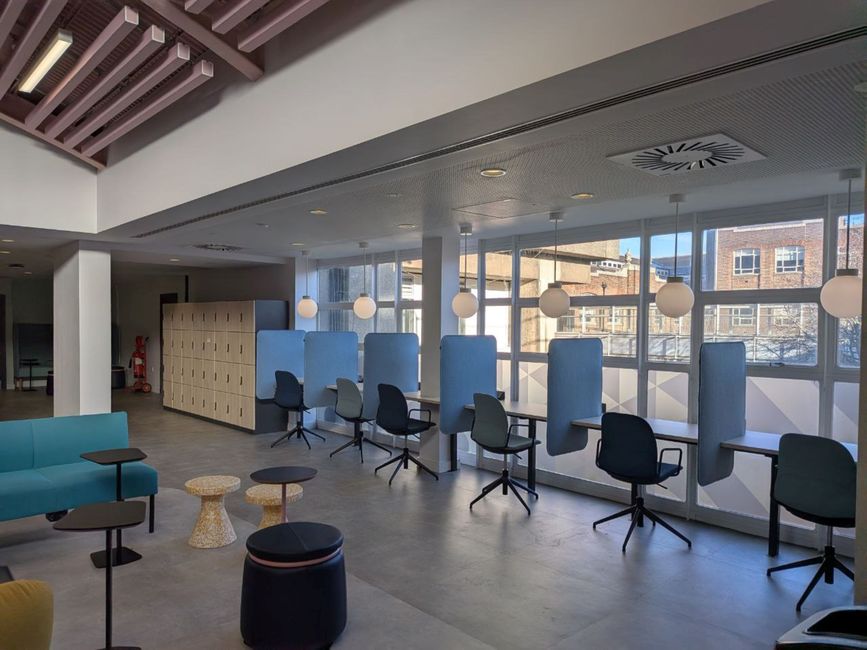
Designing for Every Mind: The Neuroinclusive Office Trades One Room for a Spectrum of Sensory Zones
Roughly one in five workers is neurodivergent, and the uniform open plan quietly taxes them all. Neuroinclusive design answers with a calibrated spectrum of sensory zones — and a business case that benefits everyone.