The Enduring Allure and Practical Realities of Stone in Kitchens & Baths
Natural stone, especially marble, brings a timeless luxury to kitchens and baths. This article explores its aesthetic appeal, practical applications, and the crucial trade-offs that lead many designers to consider durable engineered alternatives like quartz.
The Foundation of Serenity: Stone in Design
In the realm of kitchen and bath design, few materials command the same reverence and desire as stone. It’s a choice that speaks to permanence, luxury, and a deep connection to the earth. As homeowners increasingly seek to transform these utilitarian spaces into "serene sanctuaries" or "luxurious retreats", stone, whether natural or engineered, becomes a foundational element in achieving this elevated aesthetic. Its ability to create a "tone-on-tone palette" while offering a "variety of textures" makes it indispensable for designs that aim for timelessness and calm.
The Unmatched Allure of Natural Stone
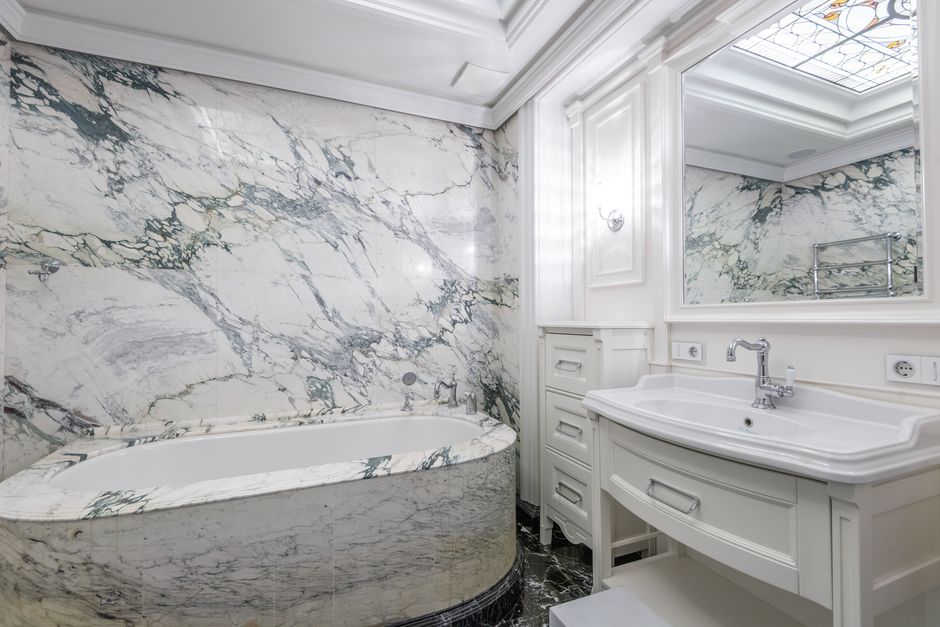
Natural stone, with its inherent variations and geological history, offers an aesthetic depth that is difficult to replicate. Each slab of marble, granite, or quartzite tells a unique story through its veining, color shifts, and crystalline structure. This organic beauty contributes significantly to the desired "dreamy, steamy sanctuary" feel in a bathroom or the sophisticated elegance of a kitchen. The material’s cool touch and visual weight ground a space, providing a sense of stability and luxury. For instance, a "Sofitel Gold Polished Marble wall" can instantly elevate a bathroom, transforming it into a focal point of opulence.
Marble: The Epitome of Elegance and Its Demands
Among natural stones, marble stands as an icon of classical luxury. Its characteristic soft veining and luminous quality have adorned palaces and grand homes for centuries. In kitchens and baths, marble is frequently chosen for countertops, backsplashes, shower walls, and flooring. Its properties, however, come with distinct trade-offs. Marble is a relatively soft, porous metamorphic rock, making it susceptible to scratching, staining, and etching from acidic substances common in kitchens (lemon juice, wine) and baths (certain cleaning products, cosmetics).
While its pristine appearance is breathtaking, maintaining marble requires diligence. Regular sealing is essential to mitigate staining, and spills must be wiped immediately. For those who embrace the patina of age and the story etched into a well-used surface, marble can be a deeply rewarding choice. However, for others seeking a perpetually flawless finish, the maintenance demands can be a significant drawback. The decision to use marble often balances the desire for unparalleled beauty against the reality of its care requirements.
Engineered Stone: Beauty Meets Practicality
Recognizing the desire for stone aesthetics coupled with enhanced durability, engineered stone has emerged as a formidable alternative. Quartz, in particular, has gained immense popularity for kitchen and bath surfaces. Composed primarily of ground quartz (one of nature's hardest minerals) combined with resins, polymers, and pigments, engineered quartz offers a non-porous, highly durable surface.
This material addresses many of the practical concerns associated with natural marble. "Quartz countertops" are frequently highlighted in modern designs for their resilience. They are highly resistant to scratches, stains, and heat, and unlike natural stone, they do not require sealing. The manufacturing process allows for consistent patterns and a vast array of colors, from solid hues to designs that convincingly mimic the intricate veining of natural marble or granite. This consistency can be a benefit for large installations where a uniform look is desired, though some argue it lacks the unique depth and variation of true natural stone. The trade-off here is often a slightly less organic feel compared to natural stone, and while durable, extreme heat can still cause damage to the resin binders.
Integrating Stone for Lasting Design
Whether opting for the unique character of natural stone or the robust practicality of engineered quartz, thoughtful integration is key to a successful design. The principle that "neutral surfaces ensures your space will stand the test of time" holds true, allowing the inherent beauty of the stone to shine without quickly dating the room. A "white-painted and rift-cut white oak cabinets complement quartz countertops" demonstrates how different materials can work in harmony.
To prevent a stone-heavy space from feeling monolithic, designers often introduce complementary textures and materials. "A variety of textures, like this sandy-hued bathroom that plays with a mix of tiles, paint shades and finishes", can add visual interest. This might include pairing stone countertops with "horizontal subway tile and vertically oriented wood-look tile" for shower walls, or incorporating "wood slats on walls and ceilings" for warmth, as seen with "teak-slat" accents in a bath. Even a "mosaic-tiled steam shower" can provide a textural counterpoint to larger stone slabs.
The Enduring Choice
The selection of stone for kitchens and baths is a pivotal design decision, impacting both the aesthetic and the long-term functionality of these critical spaces. Natural stone, with its unparalleled organic beauty, offers a timeless elegance that can transform a room into a luxurious sanctuary. However, its inherent vulnerabilities demand a commitment to maintenance. Engineered stone, particularly quartz, provides a compelling alternative, delivering exceptional durability and ease of care without sacrificing sophisticated aesthetics. Ultimately, the choice hinges on balancing the desired visual impact with practical considerations, ensuring that the chosen material contributes to a space that is not only beautiful but also enduringly functional.
Further reading
Related articles
Microcement: The Seamless Canvas for Modern Home Renovations
In the dynamic landscape of home renovations, microcement stands out as a material offering unparalleled design flexibility and a sleek, modern aesthetic. This deep dive explores its properties, diverse applications, and crucial trade-offs, positioning it as a key consideration for designers aiming for cohesive, high-impact transformations.

The Enduring Appeal of Thermal Bluestone in Luxury Outdoor Design
Discover why thermal bluestone is the material of choice for high-end outdoor environments. This deep dive explores its unique properties, diverse applications, and the trade-offs that make it a cornerstone of luxury landscape design.